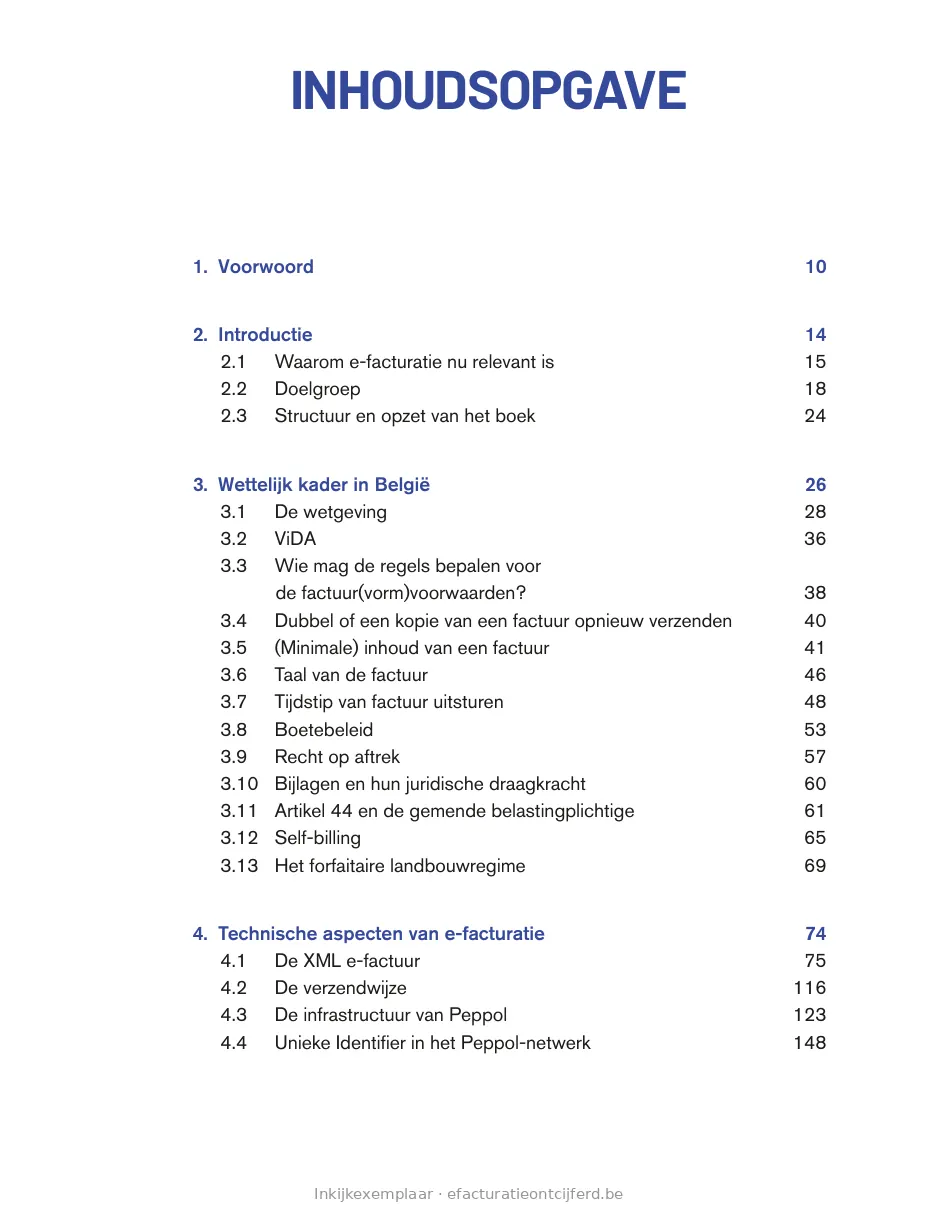
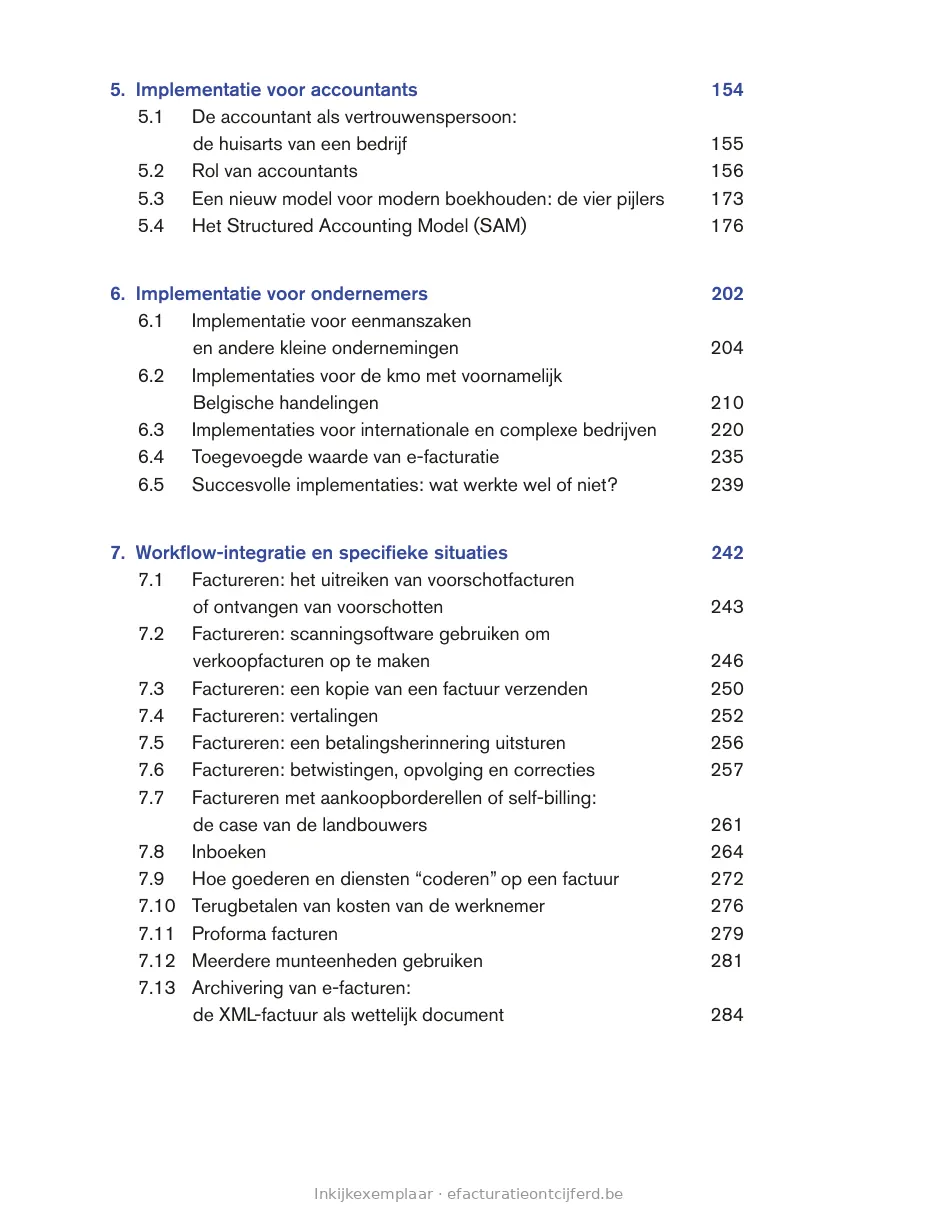
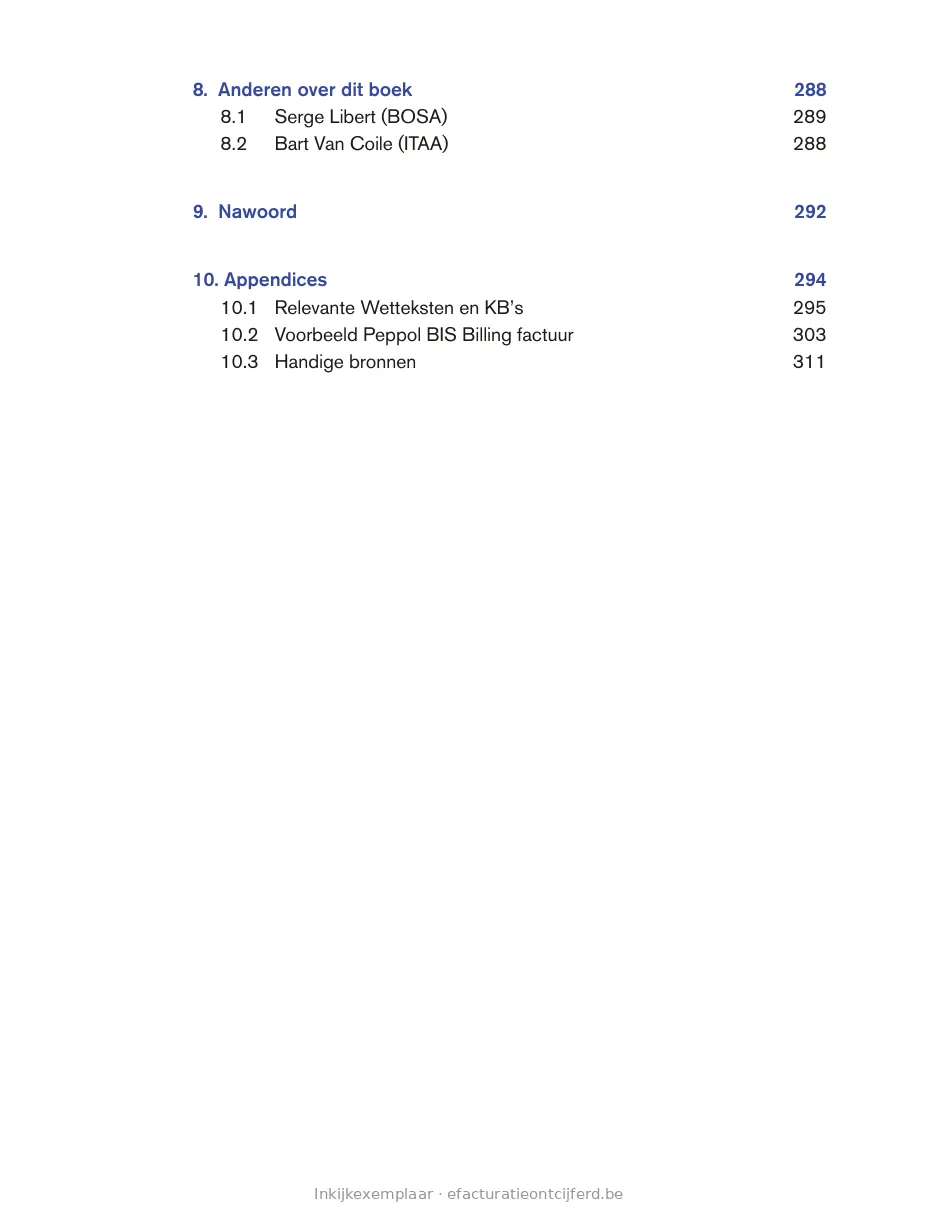
Look inside E-facturatie Ontcijferd and leaf through the first pages: the table of contents, the foreword, the start of the introduction and an excerpt from chapter 4 on the layered standards for e-invoices, from the European standard to Peppol BIS.
The book is available in Dutch. The pages below therefore come from the Dutch edition.




Excerpt from chapter 4
Technical aspects of e-invoicing
4.1.13 The layered standards for e-invoices
From the European standard to Peppol BIS: why an invoice that meets the standard can still be rejected.
Pages 94 to 96
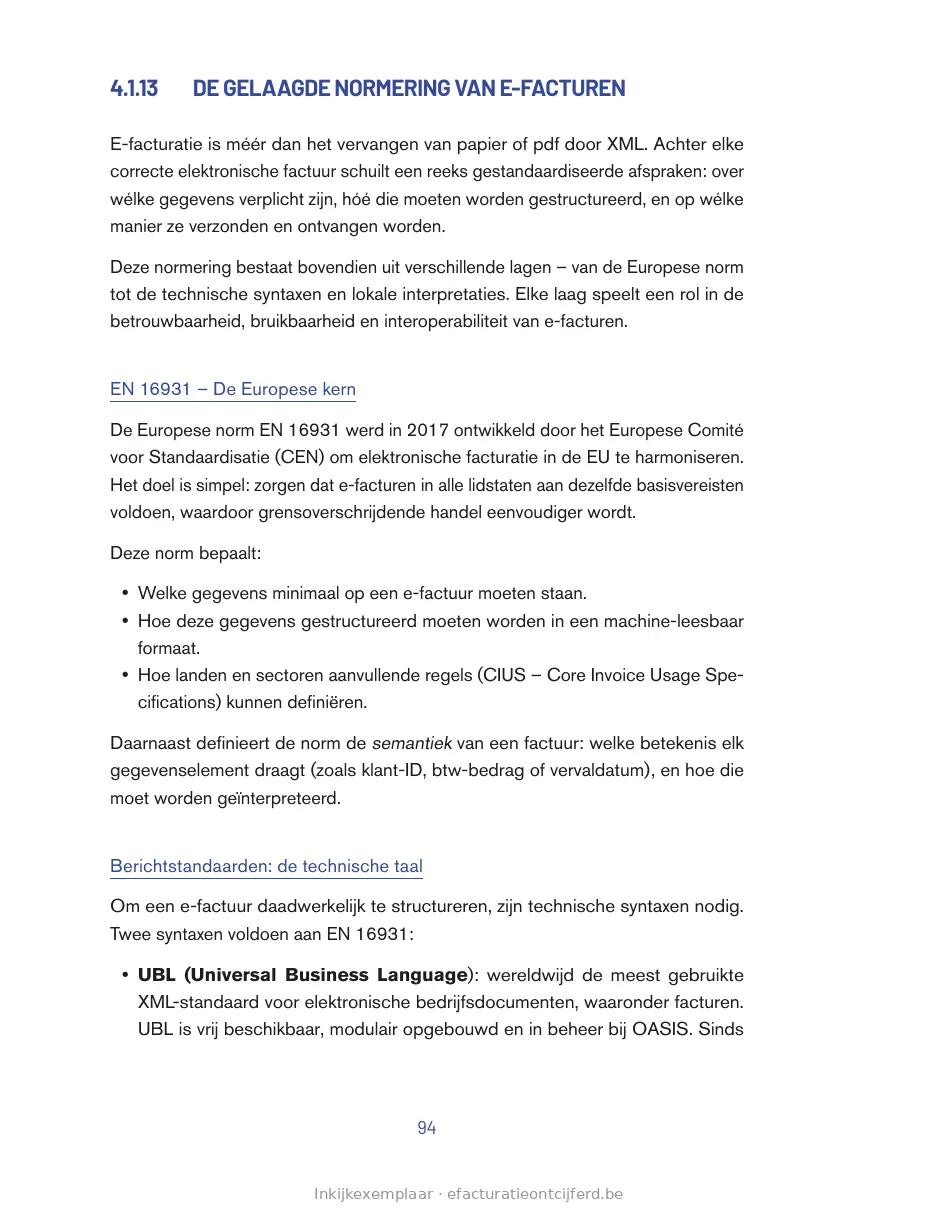
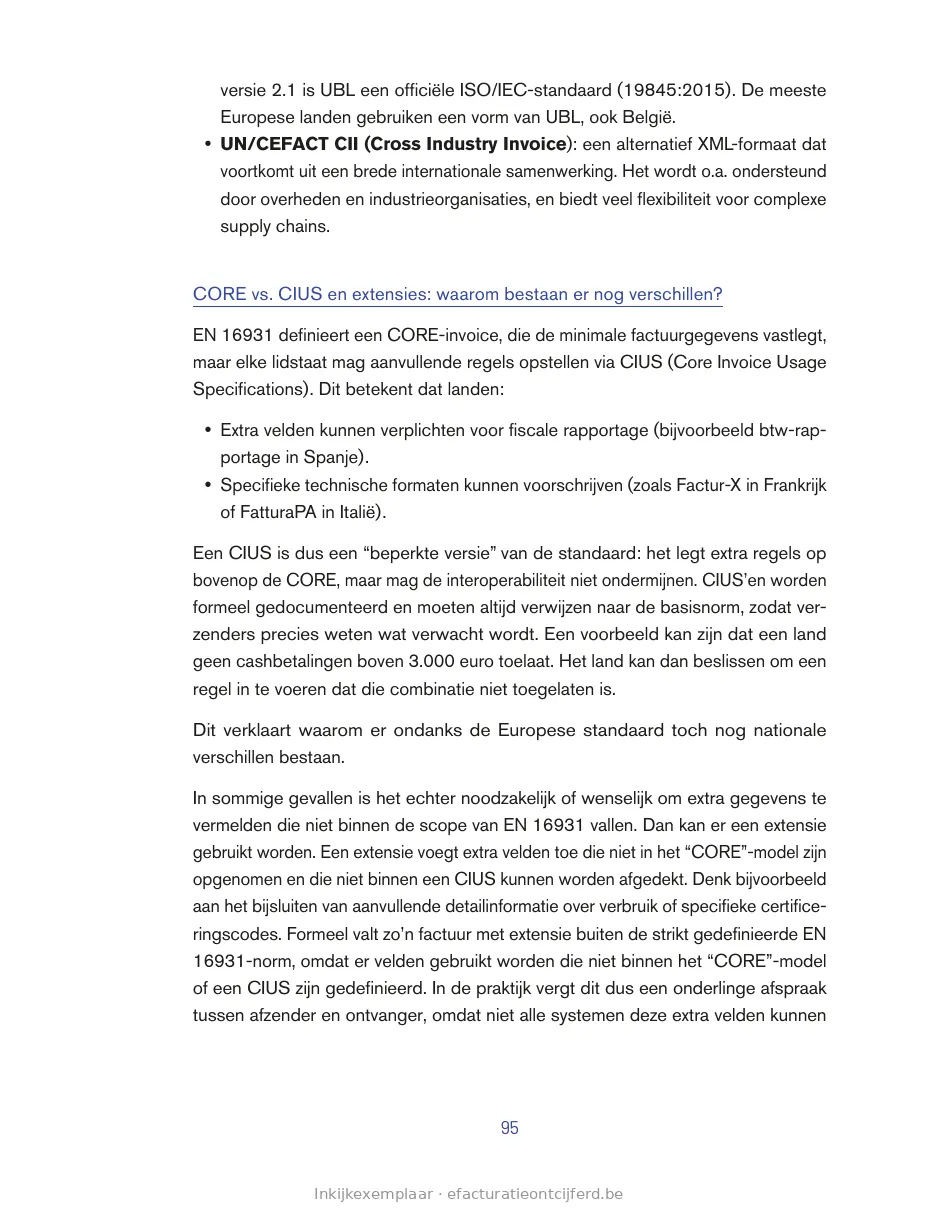
Want to read more?
The full book has 312 pages: legislation, the XML invoice, the Peppol network, implementation for accountants and businesses, and dozens of practical cases. It is written in Dutch.
Drag a page corner, click a page or use the arrow keys.
What is in the book?
- The legal framework in Belgium: the law of 6 February 2024, invoice content, penalties, self-billing and the agricultural scheme
- The technical side: the XML invoice, Peppol BIS Billing 3.0, the Peppol network and unique identifiers
- Implementation for accountants, with the Structured Accounting Model
- Implementation for businesses, from sole traders to international groups
- Dozens of practical cases: advance payments, credit notes, expense claims, foreign currencies and archiving
Why look inside before you order?
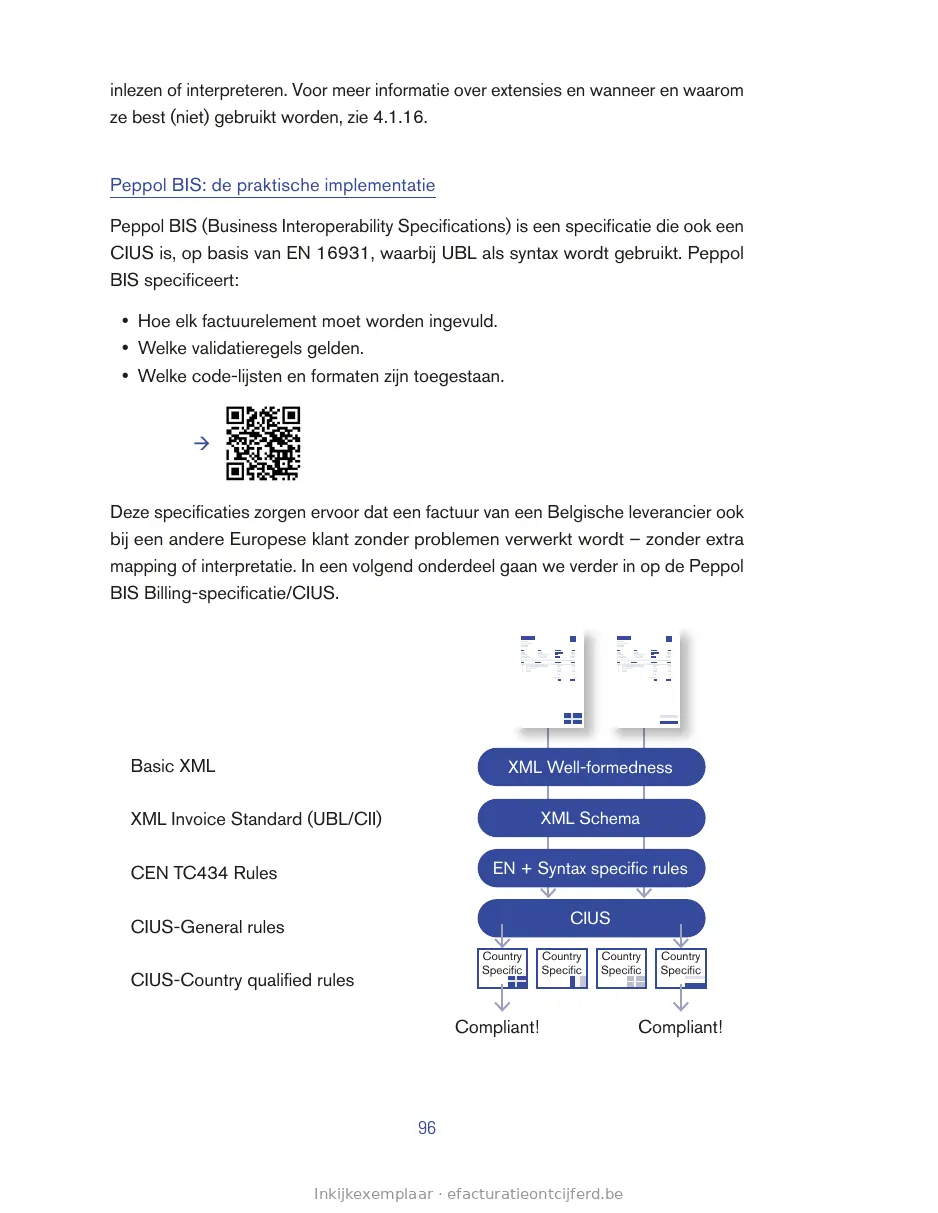
A technical book should suit you before you buy it. That is why we let you look inside the book for free. First, you see the table of contents and the foreword. Then you read an excerpt from chapter 4, which explains the layers of standards. In this way, you judge the level and the style yourself. Even if you read little Dutch, the diagrams and XML examples already give you a good idea of the content.
About the book and this look inside
Philippe Kimpe and Jelle Heyvaert wrote E-facturatie Ontcijferd for accountants, business owners and IT professionals who want to be ready for mandatory e-invoicing. In addition, the book connects legislation, technology and practice, with examples and checklists. This look inside therefore shows the structure of the book and how it reads. Next, see also the full table of contents or the frequently asked questions about e-invoicing. Finally, you find the official government information on efactuur.belgium.be.